
Adapting the Unadaptable: A Case Study of Netflix’s Current Flagships

Destin Daniel Cretton’s latest MCU joint, Spider-Man: Brand New Day, a movie that I am somehow excited about even though I rolled my eyes very heavily at the plot contrivances at the events of No Way Home, is out in theaters. This also means, we’re about a month out from the announcement that Destin Daniel Cretton had started the search to cast Naruto, Sasuke, and Sakura for a live-action Naruto adaptation. I suppose a lot of the excitement for the latter is going to be predicated on the former, but the thought certainly got something stirring.

When Chris, the fellow BNP writer who shared the news with me, posted he also jested “I would ‘simply say not adaptable’ but One Piece Live Action exists, so what do I know?”

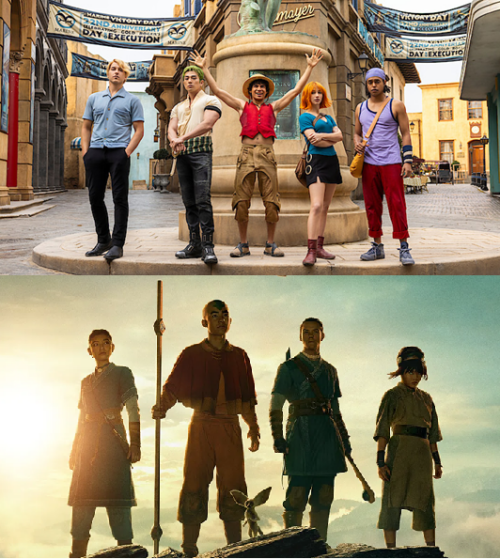
The funny thing is that right now Netflix has two live action properties that adapt beloved fan material that finished dropping their second seasons this summer and have managed to both prove and disprove simultaneously that it is in fact possible to adapt an animated series. So, let us look at why we adapt things in the first place before we discuss the highs of One Piece and the lows of Avatar: The Last Airbender.

The Reasons We Revisit…

There is a cynical part of me that looks at the attempts of adaptations as an easy cash grab. The property has proven itself in some capacity, so why risk making something new when you can remake something old. Disney is currently playing this song and dance double time to mixed (if not utterly bad) results, but it is the path of least resistance.

But on a slightly less cynical hand, adaptation offers two major things. The first is exposure. Adapting a work is an easy way to reintroduce a beloved property back into the zeitgeist. And the second is revision. Adapting the work typically comes after the completion of the original, which means the whole narrative arc is revealed and understood, which means that elements can be introduced early and be more in line with the final authorial vision than the early parts of the serialized adventures. It also allows for additions and modifications. When Harley Quinn was an invention for Batman: The Animated Series and then became a mainstay of Gotham, there was plenty of precedent of adaptations expanding on the materials.

It is harder to point out solid examples when going from animated to live action. Despite the medium being incredibly mature in more ways than one, animated stories are still seen as “childish.” The the live-action is an attempt to bring it to a wider audience, and it works. So it’s not that surprising that there are so many attempts to convert the experience in an attempt to get that exposure, provide that revision, and yes, get that bank (earned or unearned).

Let’s Look at One Piece

Against all possible sense, the One Piece live action is not only good, it is suburb. The casting is spot on, the costuming captures the cartoonish nature of the world, and the revisions to the story have been made with a clear intent to make a cleaner narrative and to factor in future plot points and sprinkle them throughout the story. Netflix’s One Piece does the unfathomable: make a story that has been running near continuously for almost thirty years into something that is indeed actually accessible to newcomers while also providing existing fans a reason to enjoy the show in this new medium.

And nontrivial part of that success does in fact seem to stem from the direct involvement of Eiichiro Oda, who seems to have an unconditional veto and final say in every element on the project. We also know that Netflix is throwing money at this particular franchise, but throwing money at something does not necessarily make it good in the slightest as we will get to.

Where One Piece succeeds where a lot of other live action adaptations fail is its willingness to embrace the ridiculousness of its source material. It does not shy away from looking silly and taking big swings. Not everything always lands, but the end result is something that aspires to emulate what made the source material great while also allowing itself the creative freedom to massage some things here and there. One of my favorite things from the second season was the inclusion of a staggering number of call-forwards that were not in the original manga or anime, but make perfect sense for the narrative; a sort of narrative patchwork that creates a slightly more seamless story. It is impressive and creates an almost unrealistic standard for any other live action adaptation going forward.

Speaking of…

Let’s Look at Avatar: The Last Airbender

My controversial take is that I don’t think Netflix’s Avatar: The Last Airbender is necessarily a bad adaptation. By no stretch of the imagination do I think it is a *good* adaptation, but the series did a few things right (I will have to spoil things, but at this point, I think you, dear reader, are okay venturing down this path).

Visually, the series does look impressive. Netflix’s refusal to properly light things aside, the costuming and set pieces are absolutely delightful, and the bending mostly works as a way to blend elemental mastery and martial arts. I think some of the narrative things they have incorporated are also fascinating texturing, namely that Zuko’s crew is the same crew of the ship he spared in his backstory and that Toph’s parents are arms dealers willingly working with the Fire Nation. These are things that are not present in the original that add a little bit more depth to the narrative and still fit within the constraints of the world. I think the casting mostly works, although I think the writers are definitely more concerned with making the story “more adult” without realizing that the original series was already adult to begin with. We had the implied genocide of an entire people haunt the main character, who was a pacifist during a prolonged war. There was enough there. But the live action tries to distill everything in such a weird and particular way that misses the entire point of everything that made the series.

Truly, the disappointing thing is that the show had the bones to be good, but there are unforced errors after unforced errors when it comes to condensing the story. One of the biggest pitfalls of the second season was that Appa was taken during the penultimate episode of the season and then immediately recovered in the finale, losing out on the months long emotional toil that Aang went through and condensing that rage into all of ten minutes. Zuko’s choices in when to be kind and when to use firebending stand in contrast to what happened in the original. Sokka continues to lack any sort of narrative arc that shows him becoming the master strategist, and they butcher one of the most iconic scenes in the original as Toph’s first time metal bending is accompanied by the single worst line of dialog I’ve ever heard, “I’m Toph Beifong and I invented metal bending,” a statement said to her mother and without any build up on why this is impressive.

Counter to One Piece, Netflix’s Avatar basically assumes that you have watched the original, leaving Easter egg after Easter egg without any of the context that made those moments important and does not actually give the viewer anything particularly novel although, it certainly takes a couple of shallow swings.

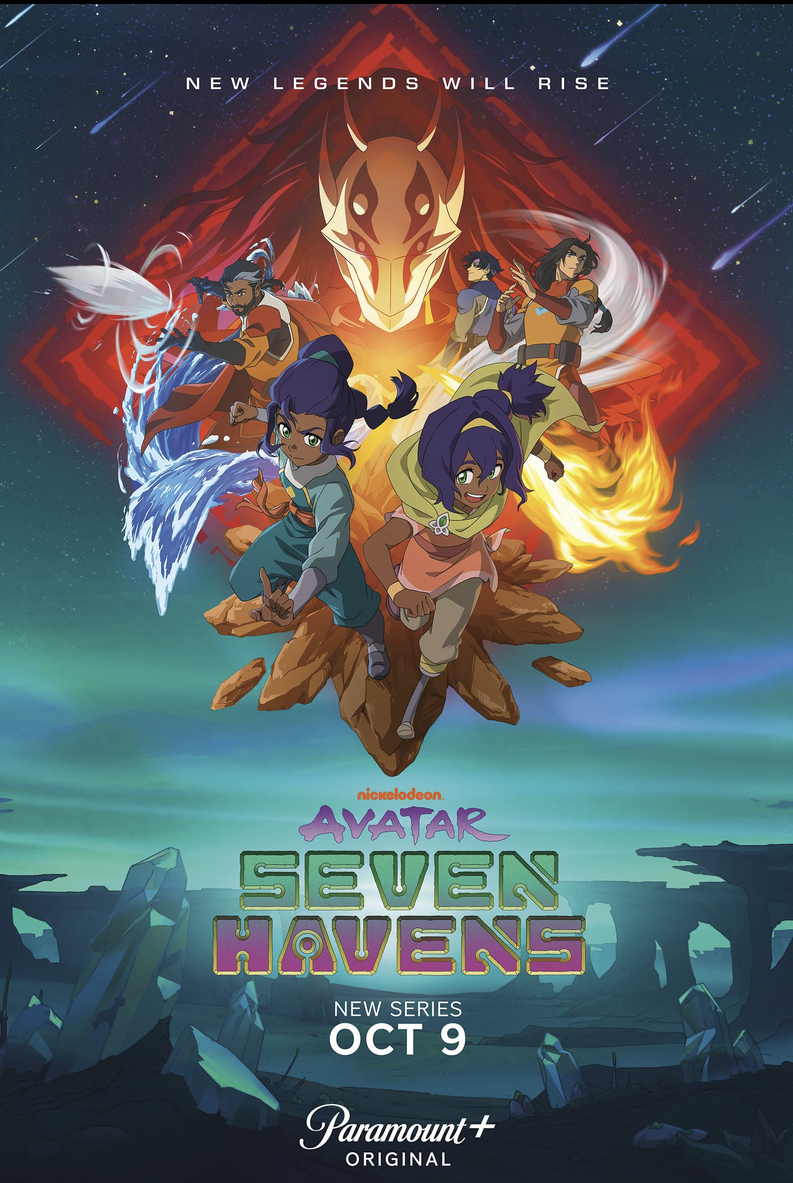
And I think a lot of that has to do with the original showrunners leaving after Netflix tried asserting too much creative control. I don’t know what exact influence Konietzko and DiMartino would have had on the live action, but their work on Avatar Aang: The Last Airbender at least still indicates that they mostly have an understanding of what makes their own universe work (although there are larger conversations about the nature of interquels, the decision to make an Avatarian language as opposed to the original using Hanzi, and the slight redesigns). Although, I am also curious to see how Seven Havens works out as well.

The dialog and writing fall flat, which is a shame because I think the cast could have given us something special under different direction, but that’s not something we’ll see.

Bonus Round: Castlevania and Devil May Cry

Appropriately enough, Netflix is no stranger to the duality of adaptation. In the animated realm, I look to Castlevania and Devil May Cry.

Castlevania is a smart story with compelling characters, smart dialog, and beautiful animation that coalesces into a brilliant saga that I will gladly watch time and time again.

Devil May Cry is a series of anime music videos with a significant budget that look great, but it fail to illicit any sort of actual emotional reaction because the series is more concerned with being edgy and satirical; however, it ends up being dull and toothless.

Perhaps this is just the universe’s way of telling us that for every great adaptation, there needs to be a terrible one to keep things balanced.

Adaptation Adaptation

Adaptations are hard. We have seen enough evidence that it is equally possible to get something excellent as it is to get something egregious. I look to things like UA:LA and see that behind caring, intentional hands we are capable of seeing properties translated beautifully to a different medium (and shout out to Christopher Clark Cowan who appropriately enough worked on Spider-Man: Brand New Day). And we have also seen what happens when people strip-mine the property to bank on nostalgia drawing just enough people to justify the bill.

So how will the live-action Naruto go? I’d give it 60/40 odds in favor at this point, but time will tell.

Want to get Black Nerd Problems updates sent directly to you? Sign up here! Follow us on BlueSky ,Twitter, Facebook, YouTube, Twitch, and Instagram!

CommentsNo comments yet

Subscribe for more

Be part of the conversation

Subscribe to Black Nerd Problems to start commenting.

Subscribe

Already have an account? Log in