
Strictly speaking, you do not need any prior knowledge to enjoy Teenage Sex and Death at Camp Miasma. This is in fact a standalone movie that exists as an individual entity of a cinematic experience. There is no prequel, no original, no franchise. However, I feel like that is somewhat of a facetious thing to actually claim because while Teenage Sex and Death at Camp Miasma has no formal predecessors, your enjoyment of this movie is going to be predicated on several things.

The latest film from Jane Schoenbrun is a movie built on reference. At its core, it is a movie about a slasher movie. As such, a fair amount of the visual language and storytelling tropes are situated in the horror genre. Even if you are only passingly familiar with the mainstays, you will recognize the constant callbacks and allusions to things like Halloween, Friday the 13th, The Nightmare on Elm Street (and if you’re versed in the genre, you may pick up things like Leprechaun). The more you understand horror, and specifically the slasher, the more you innately understand the story.
I am not as versed in horror. I have been attempting to incorporate my horror into my media consumption diet, but it is a slow process. I have probably a slightly better than the average knowledge level of the genre such that I can appreciate it even if I don’t fully adore it. That said, this is a movie about a slasher movie and specifically this is a movie about making a slasher movie. And in that respect, this metafictional approach of a filmmaker being handed the keys to a franchise they adore, choosing to meet with the original lead who vanished from the public eye, and is looking to bring the movie into the modern era kicking and screaming is something I am acutely familiar with.

As a writer and a critic, I love metafiction. I love work that examines the creative process. My favorite movie from yesteryear was Opus, which in many ways stands in parallel to Teenage Sex and Death at Camp Miasma as a movie where a younger creative gets implicated in the world of a reclusive order creative in an adjacent genre. And what I love about metafiction is how it plays jump rope with reality. Teenage Sex and Death at Camp Miasma plays with the passage the time, composition, lighting, film grain. The very foundational elements of perspective and scene are liable to change, creating a sense of unease, tension. It’s visually striking. It’s narratively enthralling. It’s uncomfortably sensual in the best way possible…
However, I can say that because I’m also queer. I am a nonbinary individual, and this is a movie about a queer filmmaker making a slasher movie based on the movie that was their sexual awakening. There are levels here. There is a cascading collaboration of factors in play here. This is a metafictional story about a horror movie through a very specifically queer lens. It is the recognition of the importance of the franchise in the development of one’s identity. It is the acknowledgement that the source material has probably not aged well in the slightest. It is the fantasy of meeting the person who helped you understand who you were.

Since watching the movie, the thing I keep thinking about is that: 1) I loved this film as someone who is nonbinary and loves metafiction, 2) I probably would have loved this movie if I had grown up on slashers, and 3) I have not seen Schoenbrun’s preceding film I Watched The TV Glow which from my understanding is in conversation with this movie, which means there are probably layers of nuance that I am missing because I only check off two of the quote unquote prerequisites to truly understand this movie, and even though, I loved it.
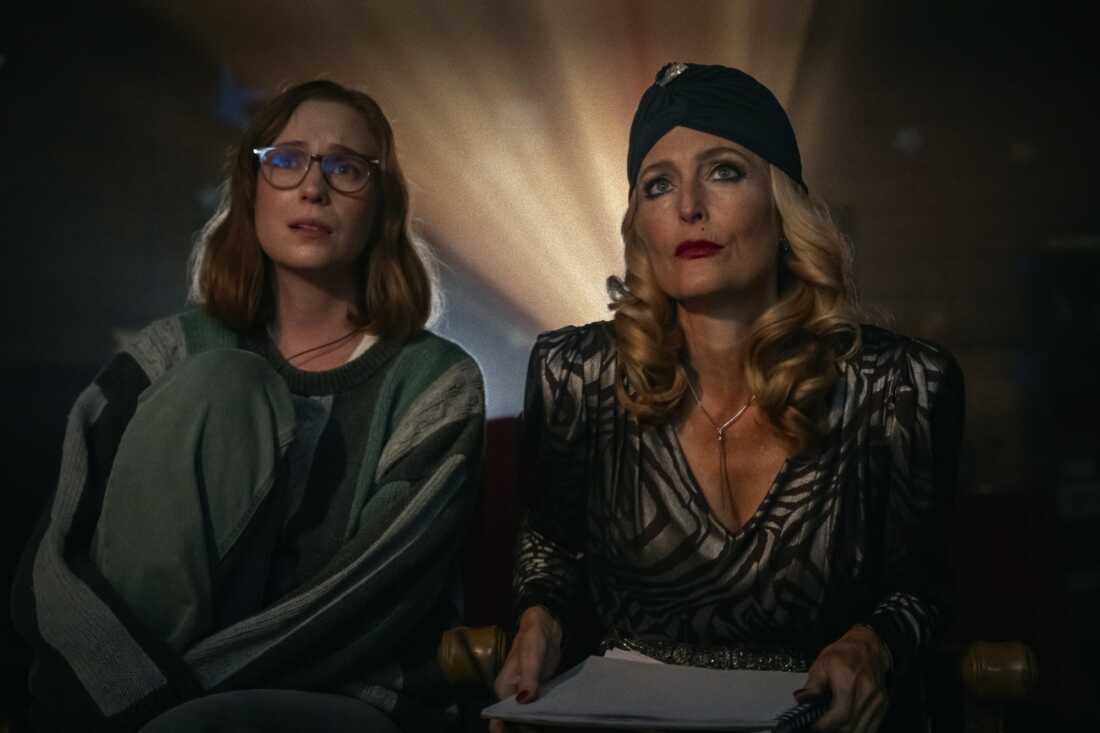
Hannah Einbinder and Gillian Anderson were utterly captivating to watch over the not quiet two-hour run time. Jack Haven managed to do a lot of acting with just their eyes. The set design of the titular Camp Miasma was wonderfully weird and quirky, and the slasher villain Little Death left the impression they were supposed to.
I loved this movie, but I also know that there are others definitely will only like it. And I know others who would be completely turned off by it. But if you are a fan of horror OR metafiction OR are queer OR are a fan of Schoenburn’s previous work, you’ll probably like it too. And if any of those ORs are ANDs, you almost certainly will.
Cover image via NPR
Want to get Black Nerd Problems updates sent directly to you? Sign up here! Follow us on BlueSky ,Twitter, Facebook, YouTube, Twitch, and Instagram!


Subscribe for more
Be part of the conversation
Subscribe to Black Nerd Problems to start commenting.
Already have an account? Log in