

The Nerd Newsletter
Join our Nerd Nation with frequent updates from Black Nerd Problems
Bookmark
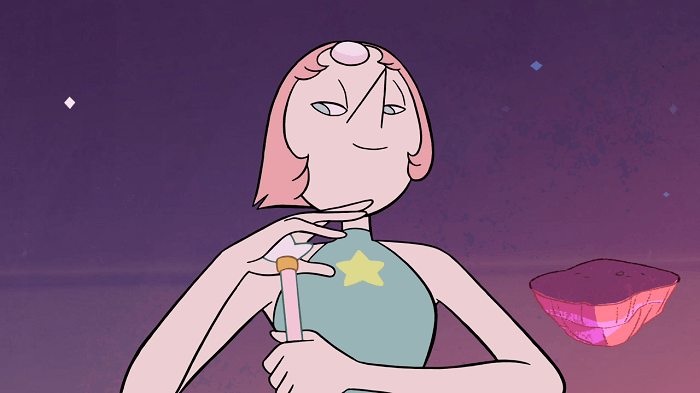
If you’re an animator searching for the secret formula to diversity, you couldn’t do much better than taking notes from Rebecca Sugar’s Steven Universe. Just the sheer number of non-white voice actors and characters alone is astounding (and that’s before delving into the topics of gender, sexuality, and alternative family styles). By itself coding animated characters as people of color without resorting to harmful stereotyping, especially in a majority white society, can be challenging to the say the least. Equally important, however, is the ability to include depictions of people of color that challenge our notions of even commonly accepted attributes or bring fresh insight to repeated narratives. It stands to reason that in a time where activism-centered hashtags like #WeNeedAAPIStudies fight for educational equality we also need to reclaim representation in arts and entertainment instead of letting whiteness be the cultural default. Enter Pearl. One of the main obstacles stopping people from accepting a POC interpretation comes from Pearl’s physical characteristics. Even with their shapeshifting abilities, though, none of the gems’ skintones allow them to successfully pass for human except for Rose Quartz (yes, former supervising director Ian Jones-Quartey explained this as having to do with some forms of rose quartz being peach in color, but that sounds suspiciously convenient) and possibly Amethyst as a person with argyria. Garnet, contrary to many fan artist depictions,…

YOU’VE REACHED YOUR LIMIT
Become a member and continue reading
Support independent journalism and unlock full access to our stories, analysis, live streams, and exclusive editorial content.
- Access to all member-only stories on
- Support writers you read most
- Read everything behind a paywall
- Access to live streams
- Comment on articles
Meet the author

Lauren Bullock
Lauren is a writer, performer, and reincarnated sailor senshi. She enjoys long walks in the woods and fighting crime as a costumed vigilante of many aliases.
View profile



Subscribe for more
Be part of the conversation
Subscribe to Black Nerd Problems to start commenting.
Already have an account? Log in