
‘Mixtape’ Review: Indie, But Not

Topic of Conversation

There is a mild firestorm circulating parts of the game-o-sphere. A conversation about whether the game Mixtape is even a game. About original ideas and IPs in gaming versus franchising sequels. About the ties between the film and gaming industry. About the overlap of conglomerate media and indie projects. About nostalgia and generational media consumption. About geopolitics and consumerism. About the very defining elements of ‘gameplay’. In a very late-stage capitalism kind of way; the conversation around Mixtape is one concerning the very soul of modern media. But we should probably just talk about the game, right? Let’s get into it. [Headings are the titles of songs on the soundtrack.]

Remember When [Plot]

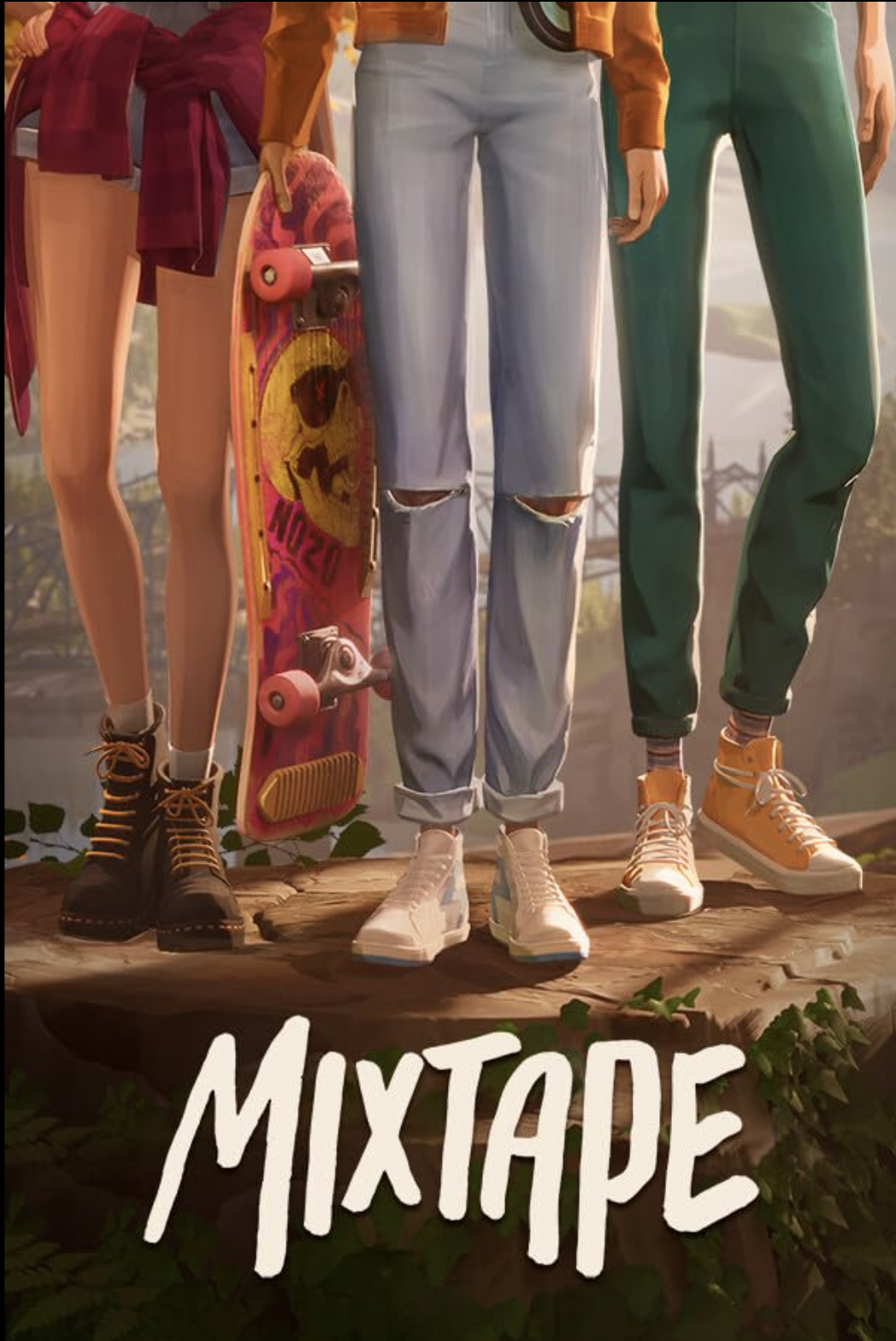
Mixtape is concentrated throwback feels. It pays homage to 80s and 90s nostalgia at the intersection of music and film. The game follows three teenagers in the mid-90s on their last days of high school and the last chill session of their young lives. You are dropped into the world of music nerd Stacy, musician slacker Slater, and mathlete Cassandra as they knock items off their ‘last day together’ to-do list. Northern California hijinks ensue, and you are with them every step of the way. Game director Johnny Galvatron says it better than I can, but I’ll just say there is a fourth character: the soundtrack. The entirety of the game is moved and formed by the music selection. Any ups, downs, changes in the story – anything that happens is both dictated and supported by the soundtrack. For real though, if you’ve ever wanted to interact with a John Hughes film, here you go – Mixtape gives you exactly that.

Mixtape
Stacy, Slater, and Cassandra are doing that lay on the hood of the car thing from indie coming-of-age movies.

Mixtape is essentially a love letter to music supervision and movie direction. A love letter placed gently in a time capsule and rolled into a surrealist walking simulator, placed on a longboard, and pushed down a hill. As Stacy, the narrative unfolds in the order of the soundtrack. A soundtrack Stacy meticulously designed to match up with the events of the day. Nothing goes as planned, but even the offshoot tracks do the job of moving the game and the gamer through the story. Strangely, Stacy explaining why any given song is playing sets the stage for players to sit in the cinematic moments being made and become hyper-present to them.

Visually, the game is beautiful and looks like a mash-up of the texture and outline style of the TellTale games and the ‘dropped frame’ stop-motion look of the Spider-Verse movies.

Atmosphere [Gameplay]

One of the more divisive elements of Mixtape is its gameplay. Which has most hardcore gamers calling it “gameplay”, with real quotes on social media posts and air quotes in IRL conversations. All of the action pieces are ‘on rails’, meaning it just goes along whether you actively press buttons or not, with no real impact on the story. This calls into question what the gaming community as a whole should consider a ‘game’. At no point in a playthrough of Mixtape are you challenged. There is no pressure and no illusion of high stakes. You walk, skate, hike, chill, fly, float, and reminisce as Stacy through a series of cinematic moments you get to ‘direct’ through button presses. The experience is immersive but mostly watched and listened to. Each memory of the trio’s friendship allows you to control…the moment. Players aren’t doing much, but they are experiencing everything. Every memory has a minigame attached, grounding players in the moment. TP-ing a teacher’s house, skipping rocks at the lake, hitting homers after hours at the baseball field. All the small things in life that make childhood memories into long-lasting keepsakes of sentiment.

State of the Heart: Target Audience

As weird as this will be for many players who wander into the mystery of Mixtape, it is quite a special game. It exists in a space between genres, like Life Is Strange. Differently, in that Mixtape’s low stakes force players to invest in the story’s lore, therefore focusing on the dialogue and keeping the ‘feel’ of any given moment. The real rap raw of it is: this is one the most niche games in gaming history.

Mixtape
Our main character trio is doing that skating thing from indie coming-of-age movies.

To really rock with Mixtape you almost have to exist somewhere on the very specific intersection of either music lover, cinephile, completionist gamer, someone versed in emotional intelligence, or all of the above (all of that is me). That intersection is increasingly rare to come by; moreover, it calls out to two particular generations: Gen X and Gen Y. This game will be unanimously appreciated by older gamers who grew up in the 80s and 90s. It’s why most critics love the game, and most gamers can’t place it. The game is brilliant, but it is so niche that it can’t be appreciated by the gaming community at large. This community gets younger and younger, their trends and tastes shifting along with their transition from new guard to old guard.

Homage is hella clean and running rampant to any eagle-eyed lover of coming-of-age flicks. Ferris Bueller’s race home through suburbia, Marty McFly skateboarding around town, a legit rager right out of an Apatow movie, even the meme of the guy talking too loud in a woman’s ear. It’s all there in Mixtape’s meta-referential glory.

Why I Liked It [A-side]

I really liked this game. It made me tear up twice. First, when the trio frolics (they actually frolic) through some grassy hills at breakneck speed until they jump off a hill and literally start walking on air. That moment hit me right in the fucking feels, because I am just old enough to remember that feeling and know that it was a joy I may never experience again. Innocence and exploration, pushing to the limits of safety for the love of the game, no matter what the game was. Mixtape nailed it.

I teared up again at one of the emotional peaks, where all of the feel-good positivity takes a sharp turn and Stacy introduces a song that found me in my senior year of high school. I was not ready for Stacy to put her headphone on and blare “Roads” by Portishead. For sure, I had listened to that song like an hour earlier. But it’s the memory of getting dumped by a girl I really liked, putting my headphones on, and blaring “Roads” on the train ride home. Mixtape brought me right back to that moment, and I just knew I was experiencing something profound. For some of us older players, this game is the closest we can get to time travel.

Mixtape
Our trio is doing that fantastical thing from indie coming-of-age movies.

Well, What’s the Problem? [B-side]

For all of the things said to be wrong with the game, it is still something created from the ingenuity and brilliance of a group of people dead set on making something with depth that is enjoyable. The issues I have with the game are more connected to what is happening behind the scenes. Annapurna Interactive is a subsidiary of Annapurna Pictures, the film company launched in 2011 by producing juggernaut Megan Ellison. Ellison is a serious staple in the industry, along with her brother David Ellison who launched Skydance Media. Both of whom learned the tricks of the trade from their Billionaire father Larry Ellison. CEO of Oracle, Larry Ellison. Proud Zionist Larry Ellison who funnels money into Israel, Larry Ellison. So, for me the problem with the game is knowing that in some form or fashion it’s proceeds assist in the continuation of war crimes globally.

Also, Mixtape is being talked about like an indie darling when it’s not. Mixtape has a firm handle on the indie aesthetic, but Annapurna Interactive’s connections give it way more flexing power than any indie project could hope for. Notably, there is no ‘streaming mode’ for this game. Typically, a game with licensed music would have a version of the playthrough that replaces said music so that streamers aren’t flagged for copyright infringement. Annapurna Interactive paid for the soundtrack license *checks notes* IN PERPETUITY. So yeah, the commodification of ‘indie’ vibes by the branch of a media giant isn’t sitting well. Further insult to injury, they named the game after a medium that originated in Hip-Hop and had the single, solitary nerve to not have any Hip-Hop represented on the soundtrack! How you gonna name it Mixtape and not have Whoo Kid or Jazzy Joyce!? What part of the game is that?

Stacy & Cass
Stacy (L) and Cassandra (R) doing that split screen phone call shot from indie coming-of-age movies.

More Than This

But, the game? Kind of awesome. The replay value isn’t super high, unless you want to go back into the game and change the way a moment happens. Which I might. It holds very little of the experience of youth of color save for some of Cassandra’s backstory. But nowhere near enough Black music for the timeframe of the mid-90s. They do threaten to use Montell Jordan’s “This Is How We Do It”, but that never comes to fruition. Took me out of the immersive magic of the game, to be honest. Broad strokes of this game are brilliant and feel really fresh. If you are into a different kind of experience, check Mixtape out. Just don’t act like it’s an indie game.

Want to get Black Nerd Problems updates sent directly to you? Sign up here! Follow us on BlueSky ,Twitter, Facebook, YouTube, Twitch, and Instagram!

Tags:

  • Poet, MC, Nerd, All-Around Problem. Lover of words, verse, and geek media from The Bronx, NYC.

  • Show Comments

Your email address will not be published. Required fields are marked *

comment *

  • name *

  • email *

  • website *