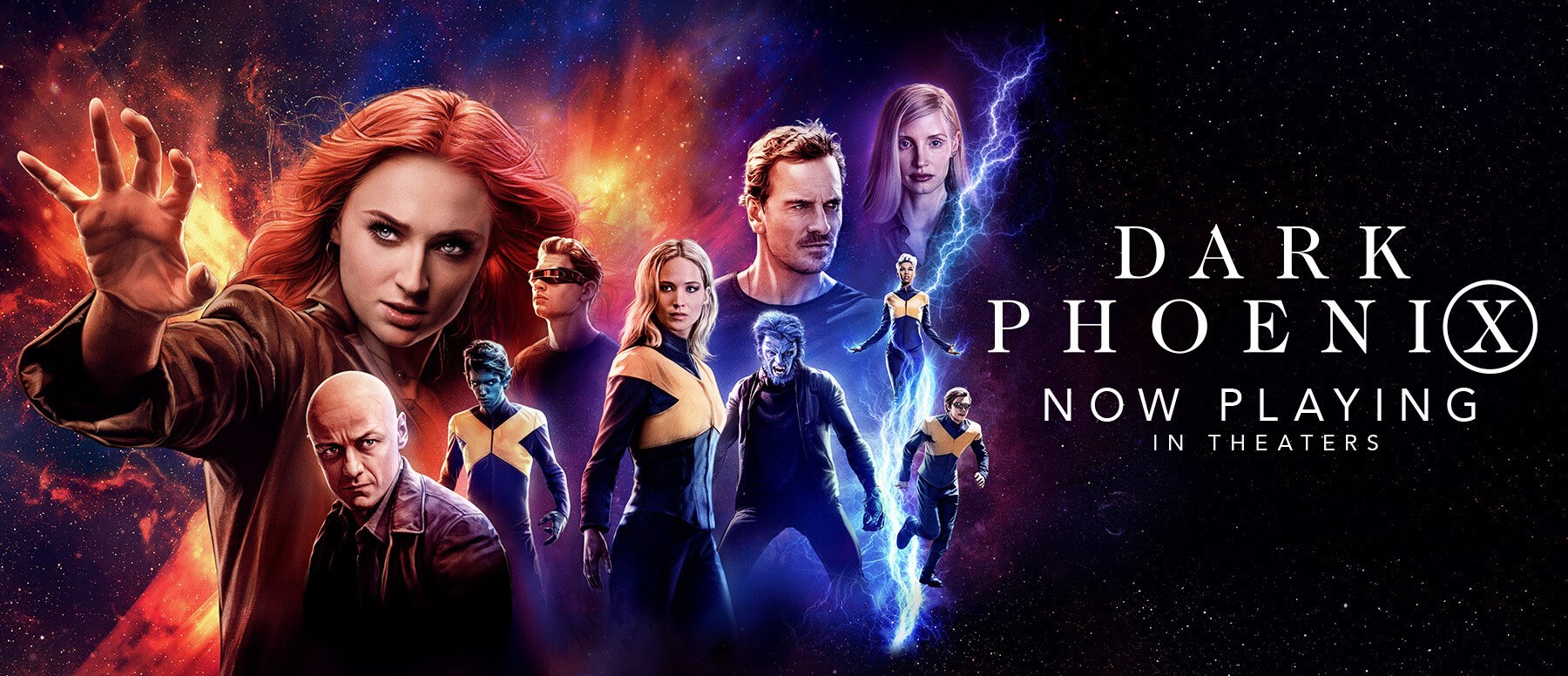

A Professor X voiceover atop a black screen introduces a familiar origin scene motif. Only this time, it is a young Jean Grey who is the focus in the long-delayed Dark Phoenix. Fittingly, the emergence of Grey’s powers causes a traumatic car crash where her family is (seemingly) killed, landing her in the care of Charles Xavier. Repeated and elaborated upon several times throughout the film, this car crash is sadly more symbolic of the film itself than anything actually intended by the film’s producers. In this adaptation, the X-Men find themselves pit against one another as Jean Grey’s powers are enhanced by the cosmic Phoenix Force, unlocking tragic memories that lead her on path of destruction.“What you choose to do with your gift is entirely up to you . . .”
The Dark Phoenix in Print
The “Dark Phoenix” saga originally appeared in the X-Men comics over the course of two separate arcs — beginning in Uncanny X-Men #101 – 108 (1976-7) and concluding in Uncanny X-Men #129-138 (1980). In its original incarnation, the X-Men are dispatched into space for a mission when Jean Grey is inhabited by the cosmic Phoenix Force. Back on Earth, Jean’s newfound power leaves her vulnerable and allows her to be manipulated by the illusion-weaving mutant Mastermind. He corrupts her into joining the Hellfire Club as their new Black Queen. When his control backfires during a psychic battle with Cyclops, Jean’s wrath is unleashed. The Dark Phoenix persona emerges, lashing across the universe and decimating an entire planet. As a result, the Shi’ar Empire, led by Charles Xavier’s lover Lilandra, send their Imperial Guard to bring in Jean as the host of the Phoenix for trial. What followed was an epic of galaxy-hopping friendship, love, and sacrifice some would say is untranslatable on screen. Avengers: Infinity War and Endgame, however, prove just the opposite. Instead of engaging with the epic source material, Dark Phoenix overreaches and underwhelms at every possible opportunity, creating a self-serious parody that feels more like an episode of Beverly Hills 90210 with X-Men cosplay.
The Dumb . . .
Afters months of delays, shuffled release dates, and rumoured reshoots to restructure the entire third act, Dark Phoenix arrives dead on arrival. Treading the same path as X-Men: The Last Stand, it minimizes a story meant for three films into a boring, rushed film that is unforgettable only for how comedically horrible it all plays out. First-time director, long time X-Men writer/producer Simon Kinberg ultimately repeats the exact same mistakes as the worst entry in the series. Vague and illogical emotional leaps, underdeveloped relationships, and sloppy storytelling with generic characters and performances create something that feels like the screenplay was written and carried out as an “I hate you” letter to not only fans of the comics, but of the film franchise itself.
The Dumber . . .
Per usual, the character development and translations for the mutant on-screen counterparts fall flat. Since X-Men: First Class, the use of Mystique as a hero and founding member of the team has always been wrong, off-tone, and overly-influenced by the star status of Jennifer Lawrence. Lucky for Mystique and Lawrence, the character dies early on as Jean loses control of her powers after attempting to reconcile with her father. This incident triggers the other players to take action — Beast seeks out Magneto to kill Jean to avenge their mutual blue lover; Charles and the other X-Men want to stop her from creating an incident that could lead to the introduction of mutant internment camps; and body-snatching aliens known as the D’bari appear on Earth to reclaim the Phoenix Force for themselves. In the original comics, the D’Bari were a race whose planet was annihilated by the Phoenix. Sadly, in this film incarnation their origins are vague, and their intentions merely unclear and almost inconsequential to the plot.
The only thing that the film happens to consistently maintain is the franchise’s snaggletooth-fractured timeline. Dark Phoenix takes place in the year 1992, using the Endeavour space shuttle mission as its historical anchor. In the 8 years since saving the world in X-Men: Apocalypse in 1984, the X-Men have become world-beloved heroes and icons. Little boys clutch Nightcrawler dolls and young girls carry placards declaring their love for the team. (Note: This set up for the inevitable rise and fall cliché of outsiders who are suddenly accepted only to be shunned again actually could have been an interesting theme and plot for a better film by more careful filmmakers less concerned with beating a dead horse.) Days of Future Past took place in 1973 and 2023, while First Class kicked off the new timeline in 1963-64. Professor X, Magneto, Beast, and Mystique should all technically be 29 years older than their original appearance…you know, in a timeline that makes sense.
The Dumbest . . .
Neither Fassbender’s role as Magneto nor James McAvoy’s turn as Xavier can muster enough charisma to make up for the blank, pouty boredom that runs throughout the film and Sophie Turner’s transformation into Phoenix. The most emotional visual exploration the film can offer is a shot of Grey crying in the rain next to a trashcan like some a 90’s grunge rock video. When she finally does go full Phoenix Force, there is nothing more than a vague display of orange and pink energy signatures, giving no real scope to the meaning or depth of the cosmic force’s power or proof of why the D’Bari need to harness it. Scenes meant to be emotional and poignant come as comedic-melodrama without cracking a smile. Anytime Sheridan and Turner attempt to emote toward one another, or most embarrassingly, when Phoenix forces Xavier to “walk” to her up a flight of steps, one has to wonder if the actors, director, or even editor thought this scene worked on any serious level.


Subscribe for more
Be part of the conversation
Subscribe to Black Nerd Problems to start commenting.
Already have an account? Log in